
The best eSIM for a Portugal road trip
The eSIM setup for a Portugal road trip: unlimited data, Algarve and Douro coverage, electronic tolls, parking apps and what to install before you collect the car.
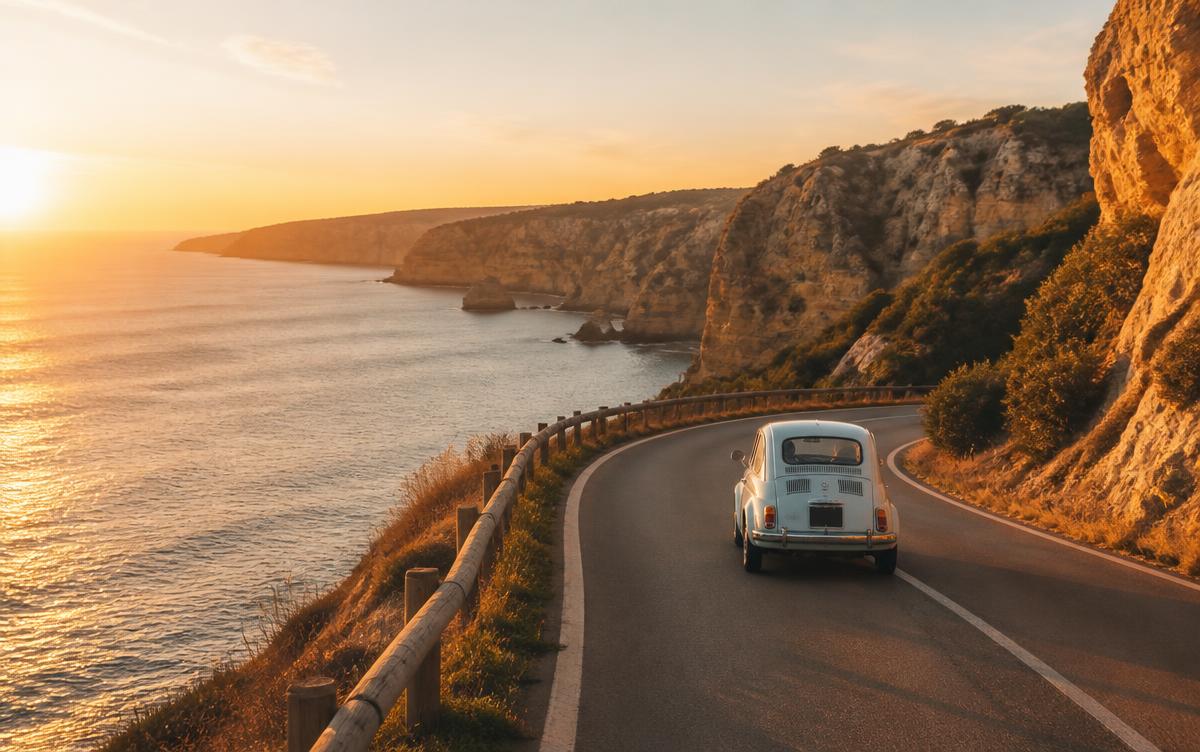
Portugal is one of the easiest countries in Europe to drive, and one of the easiest to get quietly caught out in. The roads are good, the distances are short, and then you meet an electronic toll gantry with no barrier, a coastal town where every parking bay is app only, and a viewpoint reached by a track your map has opinions about.
This guide is written for the drive rather than the city break. It covers where coverage thins out, how much data a driving day really uses, how the toll system works for a rental car, and the ten minutes of setup at home that stop you standing in a car park at Lisbon airport with no signal.
A classic ten day loop, and where connectivity matters
You do not have to drive this exact route, but it is a useful way to think about where the connection matters most and where you can happily lose it for an hour.
- 1
Lisbon to Sintra and Cascais
About 1 hourParking near the palaces is app based and fills early, so live availability and payment apps matter far more than maps here.
- 2
Lisbon to Évora and the Alentejo
About 1 hour 30Long quiet roads with good coverage on the main routes and thinner signal on the farm tracks between villages.
- 3
Alentejo to the Algarve
About 2 hoursMotorway driving with electronic tolls. Worth sorting out how your rental car pays before you join the A22.
- 4
Algarve coast, Faro to Sagres
About 1 hour 30 plus wanderingBeach access roads and cliff car parks are where offline maps earn their place, and where you will want to send photos home.
- 5
North to Porto and the Douro valley
About 5 hours from FaroThe Douro's terraced roads are steep and twisty with real signal gaps between villages. Save the whole valley offline before you start.
What coverage is actually like on the road
On motorways, along the coast and around Lisbon, Porto and the Algarve towns, mobile data in Portugal is fast and consistent. The places you notice a difference are the Douro valley's terraced back roads, the Serra da Estrela mountains, the interior of the Alentejo away from main routes, and parts of the Peneda Gerês national park in the far north.
Signal usually returns within a few minutes of dropping back onto a main road. The practical fix is not a different network, it is preparing for the gap before you reach it.
Download offline maps the night before
Save the whole day's driving area, not just the destination. The Douro and the Serra da Estrela are the two regions worth being thorough about.
Screenshot the important things
Rental agreement number, hotel address in Portuguese, the toll arrangement. A screenshot works with no signal at all.
Let the passenger be the connection
Two phones sharing one plan through hotspot is calmer than one phone doing navigation, music and messages at once.
Electronic tolls, and why they surprise visitors
Several Portuguese motorways, including the A22 along the Algarve, are barrier free. Cameras read the plate and the charge arrives later, which means there is nothing to pay at the roadside and nothing to tell you it happened. Rental cars are normally fitted with a transponder, but you have to accept it at the desk and you should know whether you are being charged a daily fee for it.
Get this straight before you leave the airport, and take a photo of the paperwork. It is the single most common unexpected charge on a Portuguese road trip, and sorting it out afterwards from home is far more painful than asking one question at the counter.
Unlimited data, and 10% to street dogs
rufly plans are unlimited for the length of your trip, so navigation, music and photo backups all come out of the same pot. Ten percent of what you pay goes to shelters caring for street dogs.
See Portugal plansHow much data a driving day really uses
Turn by turn navigation is lighter than most people expect once the map area is cached, because the phone is mostly pulling traffic updates rather than fresh tiles. What actually consumes data on a road trip is everything around the driving: music for five hours, uploading a day of beach photos, video calls home, and a passenger watching something on the flat Alentejo stretches.
That is the honest reason we sell unlimited plans rather than data buckets. On a driving holiday you should not be rationing music on the last day, and maps should never stop working because a video call ran long.
Navigation
Light, and lighter still with offline maps saved. This is rarely what empties an allowance.
Music and podcasts
The quiet giant of any road trip. Download playlists on hotel wifi if you are on a limited plan.
Photo backup
Set backups to run overnight on wifi, or your phone will upload the whole day while you drive.
Set the eSIM up before you collect the car
Install the eSIM at home while you still have wifi, then leave it switched off until you land. Installation is the part that needs a stable connection. Switching it on is instant.
When you arrive, turn on the travel line, set it as your data line, keep your home number on for calls and bank codes, and turn data roaming on for the travel line only. That last step is what stops your home network quietly charging you while you queue for the car.
Before the flight
Install the eSIM, save offline maps, download music, screenshot the rental booking.
On landing
Enable the travel line, set it as the data line, check maps loads before you leave the terminal.
In the car
Mount the phone, start navigation before you pull out of the space, and keep a cable in the door pocket.
If you are crossing into Spain
Plenty of Portuguese road trips clip Spain, whether that is Seville from the Algarve or Salamanca from the north. A plan that covers the wider region rather than a single country saves buying a second thing halfway through the trip, so check the coverage list before you point the car east.
Which eSIM to pick for a Portugal road trip
Buy one plan that covers the whole trip rather than stacking short ones. Validity starts when the eSIM first connects to a local network, so a 10 day trip is comfortable on a 15 day plan with a buffer either side, and a longer loop taking in the Douro and Spain is simpler on the 30 day plan.
Questions drivers ask
Is a travel eSIM good for a Portugal road trip?
Yes. A travel eSIM uses the same local networks as a Portuguese SIM card, but you install it before you fly and skip the airport queue. It is also far cheaper than a roaming pass from your home network.
Does an eSIM work in the Douro valley and the Algarve?
Coverage along the Algarve coast and around the main Douro towns is good. The terraced back roads of the Douro and the mountain areas inland have real gaps, so save offline maps for the whole valley before you drive it.
How much data do I need for ten days in Portugal?
Navigation, music, photo backups and video calls add up quickly on a driving holiday. rufly plans are unlimited by duration, so a 15 day plan covers a ten day trip with nothing to calculate.
Do I need data to pay Portuguese motorway tolls?
No, tolls are charged to the car rather than your phone, but you do need to sort the transponder out with the rental desk. Being online makes it much easier to check the arrangement and keep a record of it.
When should I install my Portugal eSIM?
Install it at home on wifi a day or two before you fly and leave it switched off until you land. Installation needs a stable connection; activation does not.