
Travel tech news
What 5G Standalone roaming means for travellers
On 21 September 2026, T Mobile and Jio said they had achieved the first live 5G Standalone roaming connection between the United States and India. That is important network news, but it is not a reason to throw away your travel data plan just yet.
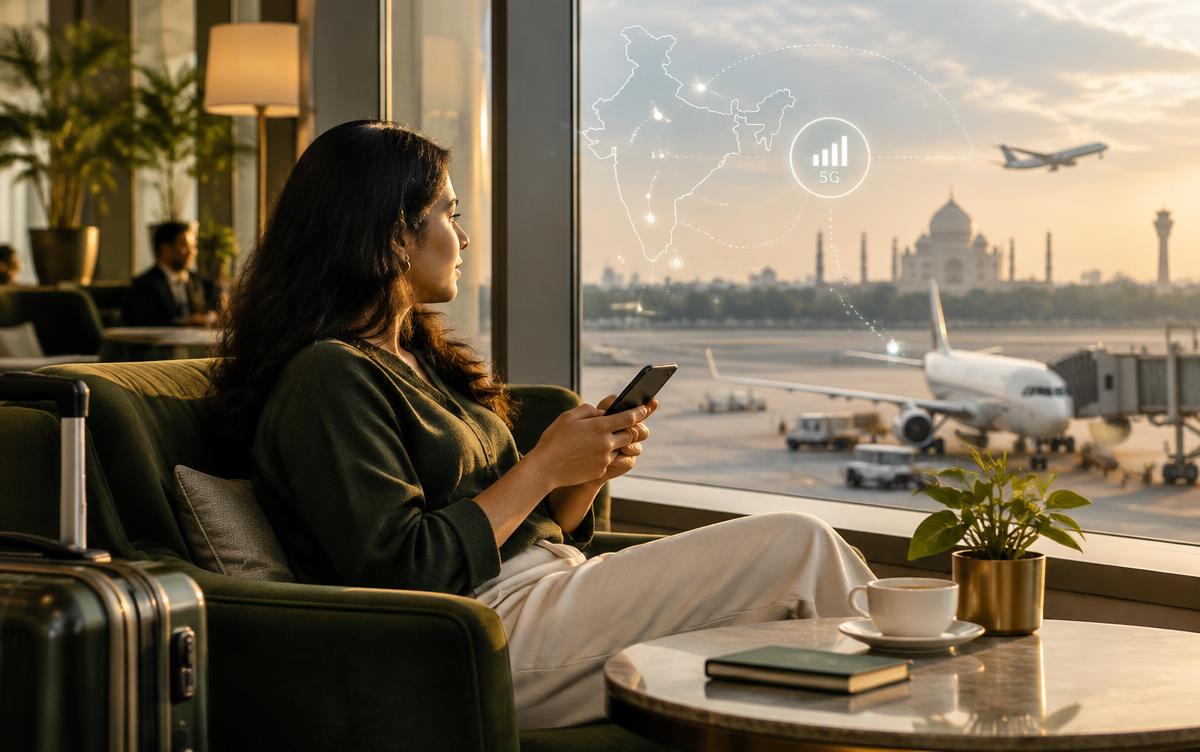
The short answer: 5G Standalone roaming should make international 5G feel more like domestic 5G when the right networks, phone and plan meet. For now, this is a narrow milestone, not a worldwide consumer guarantee.
T Mobile and Jio announced that they had completed what they describe as the world's first 5G Standalone roaming connection, enabled by Syniverse's interoperability platform. The announcement says it gives T Mobile customers access to true 5G Standalone roaming while travelling internationally, and Indian coverage reported that Jio users can use the same kind of roaming on T Mobile's network in the United States.
That matters because a lot of 5G abroad is still a hybrid experience. Your phone may show a 5G icon while parts of the service still depend on older 4G core systems. 5G Standalone uses a dedicated 5G core, which is the foundation carriers need for lower latency, more reliable sessions, better voice over 5G and future features such as network slicing. The key phrase is foundation. A network capability is not the same thing as a promise that every traveller will see a dramatic difference on day one.
Fact box
- What happened
- T Mobile and Jio said they completed the first live 5G Standalone roaming connection, with Syniverse handling network interoperability.
- Date
- Announced on 21 September 2026, with trade coverage following on 22 September 2026.
- Route
- The practical corridor is between T Mobile in the United States and Jio in India.
- Who benefits first
- Travellers whose carrier, plan and phone all support this specific 5G Standalone roaming path.
- What it is not
- It is not a universal switch on for every traveller, every eSIM, or every country.
What is 5G roaming?
5G roaming is what happens when your phone uses a 5G network outside your home country. Your home carrier has an agreement with a local carrier, your phone registers on that visited network, and your calls, messages or data sessions are routed back through the commercial and technical systems that make roaming possible.
For travellers, the visible part is simple: your phone connects when you land. Behind that, the hard part is making two different networks authenticate the device, price the session, handle handover, support emergency rules and keep service stable while you move around.
What is 5G Standalone roaming?
5G Standalone, often shortened to 5G SA, means the network uses a 5G radio network and a 5G core. That differs from 5G Non Standalone, where a 5G radio can still rely on 4G core infrastructure for important control functions.
In roaming, Standalone is harder because both networks need to speak to each other securely at a newer layer of the mobile system. Syniverse's role in the T Mobile and Jio announcement was to provide the interconnection platform that lets the networks work together across borders.
The claimed benefit is not just a nicer icon in the corner of a phone. The companies say 5G SA roaming is designed for faster speeds, lower latency and more reliable connections. We would treat those as network capability claims until independent traveller testing shows what the difference feels like in airports, hotels, rideshares and busy city streets.
Who can use the first connection?
The announcement is specific. It is about T Mobile and Jio, with the practical corridor running between the United States and India. It does not say that every traveller in India, every traveller in the United States, or every travel eSIM now has 5G Standalone roaming.
If you are a T Mobile customer travelling to India, or a Jio customer travelling to the United States, this is worth checking with your carrier before you fly. Ask whether your plan includes 5G Standalone roaming, whether your device model is supported, and whether there is any travel pass or fair usage condition attached.
Traveller checklist
Check the roaming corridor
This announcement is about T Mobile and Jio. If your trip does not involve those networks, do not assume anything changed for your route.
Check 5G Standalone support
A phone can show 5G and still not use 5G Standalone roaming. The device, software, home plan and visited network all need to line up.
Check the cost before you land
Better roaming technology does not automatically mean better pricing. Your carrier can still charge daily roaming fees or require a travel pass.
Keep a simple backup
If staying connected matters, have a travel eSIM ready before you fly, especially if you are not on the exact carrier pair covered by the news.
Does a travel eSIM automatically benefit?
No. A travel eSIM is a way to install a mobile plan digitally. It is not one shared network. Whether it gets 4G, 5G, 5G Standalone or a particular roaming feature depends on the plan's network partners and the visited country.
That is why the practical advice has not changed much. Buy a plan that covers the country you are visiting, install it over wifi before you leave, and make sure your phone supports eSIM. For India, the useful question is still whether your plan gives reliable data where you will actually travel, not whether a separate carrier pair has announced a network first.
What has not changed
- The companies did not publish independent speed tests in the announcement.
- The announcement does not make every 5G roaming session Standalone.
- The benefit depends on device support, plan rules, local coverage and carrier settings.
- There is no confirmed public timetable for the same setup across other carrier pairs.
The sensible takeaway for India travel
If you are travelling between the United States and India on one of the carriers named in the announcement, this is a genuine step forward and worth asking about. If you are not, treat it as a sign of where roaming is heading rather than something you can depend on immediately.
Most travellers still need a boring, reliable answer: working data when the plane lands, maps that do not cut out, ride apps that load, hotel details to hand, and WhatsApp messages that arrive. A travel eSIM remains the cleanest way to get that if your home roaming is expensive or unclear.
Quick answers
What is 5G roaming?
5G roaming means your phone connects to a 5G network in another country through an agreement between your home carrier and a local carrier. You keep your usual service while the visited network carries the connection.
What is 5G Standalone roaming?
5G Standalone roaming uses a 5G core network rather than leaning on older 4G core infrastructure. In plain terms, more of the connection is genuinely 5G from end to end.
Does this mean every India trip now has better 5G?
No. The first announced connection is tied to T Mobile and Jio. Travellers still need the right carrier, plan, device and local 5G Standalone coverage.
Will a travel eSIM automatically use this?
No. A travel eSIM uses the networks and roaming agreements behind that specific plan. It does not automatically inherit a separate T Mobile and Jio arrangement.
Sources and checking note
We checked the announcement against the Business Wire release carried by Yahoo Finance, dated 21 September 2026, plus trade coverage from Fierce Network, The Hindu BusinessLine and Developing Telecoms. We have not added our own speed claims, availability promises or expansion dates.
Before you fly
Check your phone first, then pick the plan for the actual country you are visiting. If India is on the itinerary, you can compare a rufly India eSIM and install it before leaving home.